
Wine Tasting Adventure
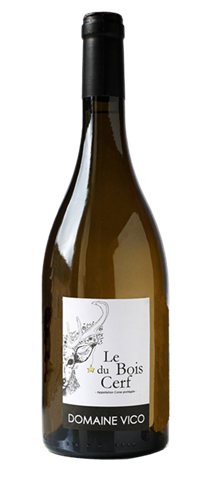
2023 Domaine Vico, `Le Bois du Cerf` Blanc - Liberty
- Regular price
- £39.49 GBP
- Regular price
-
- Sale price
- £39.49 GBP
- Unit price
- per
Couldn't load pickup availability
Domaine Vico was introduced to us by Etienne de Montille, who was impressed by Manu Venturi’s single-site wines during a visit in 2022. Thanks to 37 years of hard work and innovation, Domaine Vico is now widely viewed to be among the top producers in Corsica.
The estate was established in 1901 by Jean Vico, who planted 49 hectares of vines in the northeast of Corsica. Unfortunately, it fell into disrepair until two friends, Jean-Marc Venturi and François Acquaviva, recognised the potential of the land, purchasing the estate in 1986. They rebuilt the winery, implemented sustainable practices in the vineyard and focused on indigenous, Corsican varieties like Sciaccarellu (Mammolo, as it is known in Tuscany), Nielluccio (Sangiovese) and Biancu Gentile. Jean-Marc Venturi’s son Emmanuel, known as Manu, joined his father in the late 1990s and currently runs the domaine.
Unlike most Corsican producers, Domaine Vico’s vineyards are situated away from the coast, in the foothills of the mountains. Planted on complex soils of sandstone, schist, and volcanic sediment, at an elevation of 300 metres, the vineyards are positioned to benefit from both continental and Mediterranean climatic influences. This combination lends the finished wines great depth and a distinct mineral freshness. The estate's vineyards are organic and biodynamic certified, with Manu particularly focusing on their varied soils. This has led him to identify which plots are suited to particular wine styles and grape varieties, further optimising the potential of these sites.
‘Le Bois du Cerf’ Blanc is made from 100% Vermentinu, sourced from 45-year-old vines planted on blue schist soils. Harvested by hand, the grapes are gently crushed before undergoing several hours of skin contact to maximise flavour extraction. The juice is then fermented with indigenous yeasts in neutral, temperature-controlled tanks to preserve its fresh fruit character. Matured on fine lees for six months in concrete tanks for additional texture, the wine displays a fresh citrus and orchard-fruit character with focused acidity and a mineral finish.
‘Le Bois du Cerf’ Rouge comprises a blend of 50% Niellucciu and 50% Sciaccarellu, sourced from 30-year-old vines planted on schist and basalt. The grapes are 100% destemmed, with each variety fermented separately in concrete tanks, with indigenous yeast, for 45 days. It is then blended and aged for 12 -18 months in concrete before bottling. The resulting wine has a vibrant core of red cherry fruit with hints of spice and rosemary.
Situated in the foothills of a high mountain range, north-east of the village of Ponte Leccia, Domaine Vico's 49 hectares of biodynamically-certified vines are some of the few Corsican vineyards that lie inland at 300 metres above sea level. The south and south-east facing Vermentinu vines are on average 45 years old and are planted at a density of 4,400 vines per hectare, giving yields of 45 hectolitres per hectare. The cooling influence of altitude and frequent north-westerly winds (the Mistral, and the Tramontane) help retain acidity and the aromatic intensity in the grapes.
The 2023 vintage in Corsica was a challenging vintage, characterised by extreme weather. The year got off to a tricky start with spring frosts, torrential rain and some hail during flowering, which resulted in a reduction in yields. The summer was hot and dry and featured the hottest July on record. Nevertheless, the vines were able to draw on substantial soil water reserves to sustain them through the heat and drought. Some showers in August also provided a necessary boost for the final stages of ripening. Although yields were down around 30%, the quality of the grapes harvested was excellent.
Share