
Wine Tasting Adventure
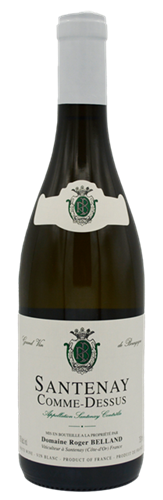
2023 Domaine Roger Belland, Santenay Blanc `Comme-Dessus`
- Regular price
- £38.99 GBP
- Regular price
-
- Sale price
- £38.99 GBP
- Unit price
- per
Couldn't load pickup availability
Domaine Roger Belland was on our list over twenty years ago following an introduction from Steven Spurrier. We drifted apart but, after bumping into Roger at Wine Paris in 2023, we tasted the wines again, visited the domaine twice, and are delighted to be working with them once more. Based in the village of Santenay, the Belland family have been making wine since 1869. Roger Belland and his daughter Julie are the fifth and sixth generations of the domaine, which spans 24 hectares in the Côte de Beaune, including their 1.5-hectare monopole Chassagne-Montrachet 1er Cru ‘Morgeot Clos Pitois’. Previously, the family had sold a large percentage of their fruit to négociants. Roger was the first generation to bring all production back under the domaine.
Most of the estate’s vineyards were planted over 50 years ago, except for the Santenay ‘Comme Dessus’, which was planted in 1996. The vineyards are worked sustainably, without the use of pesticides, to allow the old vines to flourish in soils that teem with life. A mixture of grasses, clover and alfalfa are planted between the vine rows to improve soil structure, retain water and encourage the vines to develop deep roots.
Roger and his winemaker, Martin Boyer, aim to produce wines with a vibrant fruit character. The grapes are hand harvested and then sorted by hand in the winery, with the whites pressed directly and gently settled. The lieu-dit Santenay ‘Comme Dessus’ is located at the top of the slope close to the Chassagne border and produces a wine with a bright citrus core and lifted acidity. The wine is aged for ten months in used barriques which lends a supple texture to the palate.
The Chassagne and Puligny 1er Crus are aged in barriques, 30% of which are new, for 12 months. The family’s monopole Chassagne-Montrachet 1er Cru ‘Morgeot Clos Pitois’ was planted between 1947 and 1950. The resulting wine is full and rich, balanced with vibrant acidity and a long, textured finish. The Puligny-Montrachet 1er Cru ‘Les Champs-Gains’ is planted on limestone and clay soils, producing a wine characterised by saline tension, lively acidity, and an expressive lemon-cream finish.
The reds undergo a three-week maceration and fermentation in temperature-controlled stainless-steel tanks before malolactic fermentation and maturation in barriques. Roger and Martin use a percentage of whole bunch in their ferments, which varies depending on the wine and the vintage. The lieu-dit Santenay ‘Charmes’ borders the heavier clay soils of Maranges in the southwest of Santenay. The wine spends ten months in used barriques, resulting in an approachable, expressive wine with plush red fruit and fine-grained tannins. The Belland family own 3.5 hectares of vines in Santenay 1er Cru ‘Beauregard’, planted in 1970. The resulting wine has a fragrant, bright nose, enhanced by 30% whole bunch fermentation, and a crunchy fresh fruit character. The wine is aged in barriques, 20% of which are new, which lends a fine-grained structure to the palate.
The Santenay ‘Comme Dessus’ vineyard is located at the top of the Santenay slope, above Premier Cru ‘Beauregard’. The Chardonnay vines are 27 years old and the vineyards are worked sustainably, without the use of pesticides, to best preserve the soils and the wealth of old vines. A mixture of grasses, clover and alfalfa are planted between the vines to enrich the soil composition, encourage the vines to develop deep roots and improve their resistance to drought. All of the fruit is hand harvested.
The 2023 vintage in Burgundy was plentiful, with yields some of the largest in the last seven years. The two key challenges were: keeping yields in check, which was achieved by vigorous green harvesting; and preserving acidity during an intense harvest – condensed into a shorter picking window for the whites, due to heat spikes at the end of August. The growing season began with a warm and dry winter, followed by a relatively rainy March. Budbreak was slightly delayed until early April which meant the Côte d’Or escaped frost. The spring months were sunny but relatively cool, providing perfect conditions for even flowering. This, together with sunny conditions and regular showers during the summer, meant that the vines flourished. Temperatures were cooler than usual in July and early August, and the grapes underwent a perfectly paced slow ripening. A spike in temperatures at the end of August accelerated the ripening and harvest began in early September.
The grapes were rigorously sorted on arrival at the winery before being whole bunch pressed. The must was gently settled before being racked and transferred to used barriques for fermentation. The wine was aged for a further 10 months in used barriques.
Pale lemon in colour. The nose is characterised by bright citrus fruit aromas, subtle toasty notes, and a light hint of vanilla. On the palate the wine has a lovely textural quality with lifted acidity which culminates in a crisp, long finish.
Share