
Wine Tasting Adventure
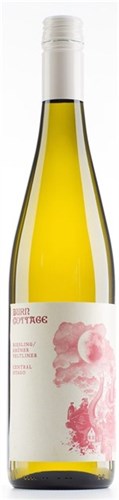
2022 Burn Cottage, `Burn Cottage Vineyard` Central Otago Riesling/Grüner Veltliner - Liberty
- Regular price
- £44.99 GBP
- Regular price
-
- Sale price
- £44.99 GBP
- Unit price
- per
Couldn't load pickup availability
Burn Cottage was founded in 2002 by Marquis Sauvage and Ted Lemon of Sonoma Coast’s famous Littorai estate. What was once a sheep paddock was transformed into one of Central Otago’s finest Pinot Noir sites, earning Burn Cottage its reputation as one of the top producers in the region. Today, Erin Larkin (The Wine Advocate) describes them as “a superstar producer—an asset for the region and indeed the country (and the New World in general).”
To identify the best sites, Ted and Marquis dug 60 soil pits to determine which Pinot Noir clones would suit which soil types. They selected ten clones to plant on five different rootstocks tailored to each soil profile. Burn Cottage is distinguished in Central Otago as the first and only estate in the region to have practised biodynamics since day one. This was Ted Lemon’s one stipulation for his involvement.
In 2010, Claire Mulholland became Burn Cottage’s winemaker, working closely with Ted Lemon. A Central Otago native, born and raised on her family’s farm in Maniototo, Claire has a wealth of experience worldwide, including stints at Domaine De L’Arlot and Domaine Dujac in Burgundy. Over the last 14 years, Claire and her team have continued to build Burn Cottage’s excellent reputation. Winemaking at Burn Cottage is best described as ‘minimal intervention’. Indigenous yeasts are utilised for fermentations, with minimal sulphur use and no filtration before bottling.
The ‘Moonlight Race’ Pinot Noir is named after a water pathway, or ‘race’, that passes through the property. The grapes are sourced from Burn Cottage’s two estate vineyards. Aged in French oak barrels for 12 months before release, the resulting wine is meant for earlier drinking. ‘Burn Cottage Vineyard’ Pinot Noir is sourced from carefully selected blocks and clones on the eponymous site and will develop beautifully with age. In 2018, Burn Cottage purchased the ‘Sauvage Vineyard’, which comprises 5.8 hectares of Pinot Noir located in Bannockburn on the northeast side of Felton Road. The soils at the Sauvage site are Bannockburn series, classified as “deep silt loams” containing quartz, quartz sands and schist gravels. All three Pinot Noirs are created with whole-bunch fermentation, resulting in the lifted fragrance that makes them so enchanting.
Ted and Marquis found the aspect of one particular plot did not suit Pinot Noir, so instead they planted just over one hectare of Riesling and Grüner Veltliner, harvesting the first crop in 2014. Grapes for the ‘Burn Cottage Vineyard’ Riesling/Grüner Veltliner were vinified separately and aged for 11 months in old oak barriques before bottling. With attractive white peach, jasmine and zesty lime blossom aromas, this wine is rich on the palate with well-balanced, bright acidity.
The Riesling and Grüner Veltliner vines account for just over one hectare of total plantings at Burn Cottage, the only part of the vineyard that is not planted with Pinot Noir. At the time of planting back in 2007, the aspect of this particular plot did not suit Pinot Noir, so they decided to plant these two aromatic white varieties instead. Most of the terrain is made up of old river beds pushed up by glacial movements. The soils are derivatives of broken down schist and granite, classified as free-draining sandy loams. The first crop was harvested in 2014. As with the Pinot Noir, the vines have been cultivated biodynamically from day one, Ted Lemon’s one stipulation for his involvement.
The 2022 vintage was exemplary, beginning favourably without any spring frost damage. While early summer brought brief periods of unsettled weather, conditions stabilised into a consistently warm and stable pattern that persisted throughout the remainder of the season. The combination of low rainfall and mild temperatures created ideal circumstances for a perfectly paced, even ripening period, culminating in an extended window of settled weather that allowed for optimal harvest timing.
Both grape varieties were carefully destemmed and gently foot-crushed, allowing the berries to bathe in their own juice for 16 hours of skin contact to extract colour, texture and aromatic compounds. Following this brief maceration period, the varieties were co-fermented together and subsequently aged for 11 months across a diverse selection of vessels, including stainless steel barrels, neutral oak barriques, and traditional sandstone jars. This varied vessel program was designed to add complexity and textural nuance to the final wine, with each container contributing its own unique characteristics.
The nose is filled with enticing notes of white peach, jasmine and lime, with spicy notes of white pepper and fresh ginger. The palate is richly textured and expressive, with a chalky element thanks to the skin contact pre-fermentation.
Share