
Wine Tasting Adventure
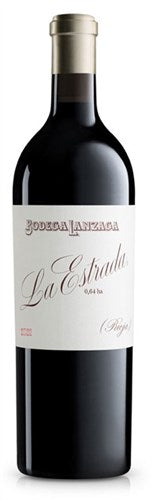
2020 Bodega Lanzaga, `La Estrada` Rioja - Liberty
- Regular price
- £83.49 GBP
- Regular price
-
- Sale price
- £83.49 GBP
- Unit price
- per
Couldn't load pickup availability
In the early 1990s, Telmo Rodríguez left his family estate in Rioja to make a name for himself in the rest of Spain. When he returned in 1998, founding Bodega Lanzaga with his friend Pablo Eguzkiza, he brought with him a broad experience from not only Spain but also Burgundy, Bordeaux (where he studied) and the Rhône.
Telmo returned to Rioja with a new perspective, determined to approach the region without the constraints of the Consejo Regulador. His rebellion is reflected in the labels of both `LZ` and `Lanzaga`, where, much to his distaste, Telmo was told by the Consejo Regulador that the village name ‘Lanciego’ could not be used on the label. Characteristically, he drew a black line across the name rather than remove it altogether, hoping that one day his Burgundian approach would be accepted by the authorities. Telmo’s knowledge of the history of Alavesa also informed his decision-making, as he knew that old vines had been planted on the hills surrounding the village of Lanciego for centuries. As a result, this village name can be viewed as an indication of origin and quality (similar to Burgundy), and this approach to site-specific winemaking is something that makes Bodega Lanzaga one of Rioja's most exciting producers.
Today, Bodega Lanzaga farms 25 hectares of organically managed vineyards around Lanciego, on a plateau at over 500 metres elevation. The 40 plots are surrounded by dry stone walls, with fruit trees planted among the vines to encourage biodiversity and revive traditional practices. ‘LZ’, their ‘regional wine’ in Burgundian terms, is made from Tempranillo, Graciano and Garnacha sourced from the vineyards that are close to the Lanzaga winery. After fermentation with indigenous yeasts, it ages in cement tanks for six to seven months before bottling. This lack of time in oak preserves the brightness of fruit, which is complemented by perfectly managed tannins.
The village wine, Lanzaga, is sourced from dozens of plots totalling 20 hectares around Lanciego. A selection of the best fruit is hand-harvested and fermented in cement tanks, before ageing in a combination of large and small oak barriques (up to 25hl) for up to 14 months. The result is a rich, complex, yet elegant wine that honestly reflects the nuances of the vineyard site.
Bodega Lanzaga have also selected four vineyards they deem to be exceptional, to create the single-vineyard Riojas. Two of them, ‘El Velado’ (mostly Garnacha and Tempranillo) and ‘La Estrada’ (Tempranillo with a dash of Graciano), are just north of Lanciego, higher up towards the mountains. They are both very small, with ‘El Velado’ being just under a hectare, while ‘La Estrada’ is less than half a hectare. Along with ‘Tabuerniga’ (Tempranillo and Graciano), which comprises 2.7 hectares of vines west of the village, towards ‘La Bastida’, these three are Lanzaga’s 1er Cru vineyards.
Bodega Lanzaga’s Grand Cru vineyard is ‘Las Beatas’, a remarkable site planted 600 metres above sea level, on the terraced hills of an amphitheatre west of Lanciego. Like all their vineyards, ‘Las Beatas’ is farmed organically and biodynamically. This wine frequently ranks among Spain’s finest, vindicating Pedro and Telmo’s decision to establish Bodega Lanzaga almost 30 years ago. All the wines from Bodega Lanzaga have reimagined the style of Rioja and cumulatively act as a beacon to other producers wishing to break free of the constraints of the Consejo Regulador.
La Estrada is one of the four exceptional vineyards selected by Telmo and Pablo for their consistent outstanding results. With a total surface less than half a hectare, El Velado sits on the highest and westernmost part of the village of Lanciego, at altitudes of 610 metres above sea level, at the base of Sierra de Cantabria. Planted in the 1940’s, it is cultivated predominately with bush-trained Tempranillo and only a little Graciano. The vines are situated on top of a slope with northeast exposure and grow on pure chalk clay soils, giving wines that have always impressed with their depth and balance. As the other wines from Bodega Lanzaga, the grapes for this single-vineyard Rioja are farmed using organic and biodynamic practices.
The 2020 was particularly challenging with higher than average rainfall and temperatures in the first part of the vintage. This meant that growers had to monitor the vines carefully, checking for mildew. Spring brought mild temperatures, along with strong and frequent storms, with a few episodes of hail. Starting from the end of June, the region saw a quick veraison due to the hotter summer temperatures. September rains have delayed the harvest but have helped to slow down the rate of phenolic ripening and maintain good levels of acidity. As it is usually the case, La Estrada was the last vineyard to be harvested, on 15th October, with the Tempranillo grapes requiring particular patience. By then, the berries had reached a point of high quality and balance.
The grapes were hand-picked and transported in small boxes to the winery. The different grape varieties were co-fermented with indigenous yeast in 30 hectolitres open-top oak vats. The wine was then matured for 15 months in large 500 litre used oak casks without fining or filtration before bottling in May 2022.
This Tempranillo led single-vineyard Rioja is layered and complex. The nose reveals a blend of very well defined red and black berries, with undertones of black tea leaves, peppercorns, and earth. The palate is fleshy palate with its ripe tannins standing out and benefiting from time in bottle.
Share